
Loading...
Serving Tulare, CA and surrounding areas. (559) 837-6721
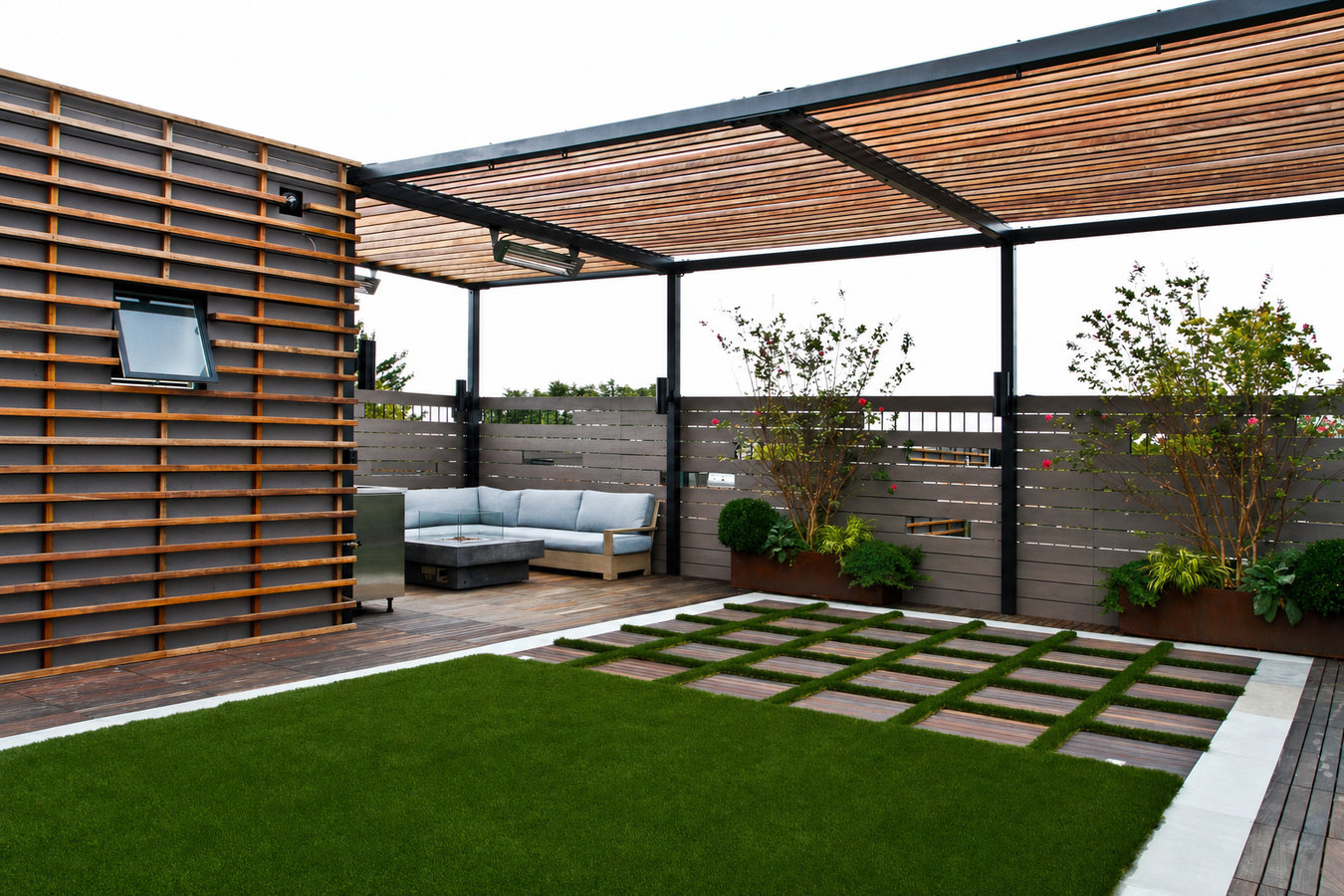
A bare, scorching rooftop is wasted space. We install artificial turf systems on Tulare flat roofs that look great, drain correctly, and need no water to stay green.
Turf for rooftop gardens in Tulare means installing a synthetic grass surface on a flat or low-slope roof, complete with a drainage layer underneath, typically completed in one to three days for a residential space. The result is a year-round green outdoor area that needs no irrigation, no mowing, and no replanting - just an occasional rinse to clear Valley dust.
Tulare has a lot of flat-roofed buildings, many dating back to the mid-20th century agricultural boom. Most of those rooftops sit empty because bare concrete or membrane in 105-degree heat is not somewhere anyone wants to be. With the right turf product and a properly installed drainage layer, that space becomes a usable outdoor room - comfortable enough to actually step onto in July with the right shade and setup.
If you are also thinking about ground-level outdoor space, our turf for landscaping service covers front yards, backyards, and decorative areas with the same drainage-first approach.
If you have an accessible rooftop that you avoid from June through September because it is just bare, scorching concrete or membrane, that is the clearest sign this project could transform the space. In Tulare's climate, an unshaded flat roof becomes uncomfortably hot - turf combined with shade structures can make it genuinely usable through the summer.
If you have tried growing plants or real grass in containers on your rooftop but struggle to keep them alive through Tulare's long, dry summers, artificial turf is worth considering. It gives you the look and feel of a green space without the water bills, the wilting, or the constant replanting every spring.
A faded, cracked rooftop membrane or concrete surface that is past its prime is a candidate for a turf overlay, as long as the underlying structure is sound. If you look at your rooftop and see a surface you would never want to spend time on, that is a signal worth acting on rather than ignoring for another season.
In Tulare, agricultural dust and wind make outdoor surfaces grimy fast. If your current rooftop or balcony traps dust in ways that make it unpleasant to sit on, turf's smooth, rinse-clean surface is a practical upgrade. A quick pass with a garden hose and the surface looks clean again - no scrubbing required.
Rooftop turf is different from a backyard lawn, and we approach it differently. Every job starts with a structural and drainage assessment - we check that the roof can support the added weight of the turf and drainage layer, and we verify how water currently exits the space. That assessment shapes every other decision: what drainage system goes underneath, which turf product we recommend, and whether any waterproofing repairs are needed before the turf goes down. We also connect this service to our broader drought-tolerant turf options for customers who want water-saving surfaces in other parts of their property at the same time.
For rooftop spaces in Tulare's high-heat environment, we specifically discuss heat performance with every customer. Some products include heat-reduction technology in the fiber - a feature worth the extra investment if your rooftop gets afternoon sun with no shade overhead. We also walk you through permit requirements upfront, since rooftop modifications in Tulare can sometimes trigger a review by the City of Tulare Building Division depending on the scope.
For property owners who want confidence that the roof can support the installation and that water will drain correctly after rain.
Best for Tulare rooftops that receive full afternoon sun and where the space will be used by family members during summer hours.
Suited to flat or low-slope rooftops where water needs a clear path off the surface - common in Tulare's mid-century housing stock.
For homeowners who want to know upfront whether their project requires a city review - and who want someone else to handle that process.
Tulare's housing stock includes many flat and low-slope rooftops built during the mid-century agricultural boom, and those rooftops are unusable for most of the year because of heat. Adding turf and a shade structure converts that dead space into something a family can actually use. On the water-cost side, California's ongoing drought restrictions make any outdoor surface that eliminates irrigation worth serious consideration - rooftop turf uses zero water to stay green, which aligns with the direction both state policy and local water agencies are pushing homeowners. The California Department of Water Resources actively promotes turf replacement as a drought-response strategy, and rooftop installations qualify under the same logic.
We work across the region, including homeowners in Hanford and Lemoore who face similar flat-roof and dust challenges. Tulare's agricultural surroundings mean the San Joaquin Valley Air Pollution Control District regularly reports elevated dust and particulate levels - a reality we build into every maintenance recommendation we give rooftop turf customers here.
We respond within one business day. We ask about your rooftop size, what it is currently made of, how you access it, and what you want to use the space for. A good contractor does not quote a price before seeing the roof in person.
We visit to check the surface condition, measure the space, assess how water currently drains, and evaluate whether the structure supports the added weight of turf and a drainage layer. This is also your chance to ask every question you have.
You receive a written estimate breaking out materials, labor, drainage, and any additional work needed. We also tell you at this stage whether your project requires a permit from the City of Tulare and who handles that process. Do not sign anything until you understand what is included.
We clean the roof surface, install the drainage layer, cut and lay the turf to fit, and secure edges and seams. Most residential rooftop jobs take one to two days. Before we leave, we walk you through the finished space and explain how to maintain it in Tulare's dusty conditions.
Free site assessment, written estimate, no obligation. We reply within one business day.
The biggest risk with rooftop turf is water damage from a drainage system that was not designed for the specific roof. We assess drainage before we write a single number on an estimate. That step is what separates a rooftop that performs for 20 years from one that causes problems within the first season.
In Tulare's climate, putting any turf on a rooftop without talking about heat performance is irresponsible. We walk every customer through product heat ratings and shade options before installation. A rooftop that is comfortable to use in July is the goal - not just one that looks green from a photo.
Navigating the City of Tulare Building Division on your own can feel complicated if you have never pulled a permit. We know which rooftop projects require permits here and which do not, and we manage the paperwork. Your project is fully above board - no surprises when you sell or refinance.
Rooftop turf is genuinely different from a backyard lawn, and not every contractor has done it. Ask us specifically for rooftop project examples - not ground-level work - and we will show you completed jobs in the area. That is how you know a contractor has actually worked through the drainage and structural challenges before arriving at your property.
We work in Tulare regularly and understand the local conditions - the heat, the dust, the flat rooftops, and the city permit process. That local knowledge is what makes the difference between a rooftop project that works long-term and one that looks good in photos but causes issues down the road.
Water-saving turf options for ground-level lawns and yards that eliminate irrigation in Tulare's dry Central Valley climate.
Learn MoreFront yards, backyard borders, and decorative areas built with the same drainage-first approach we use on every rooftop project.
Learn MoreSummer books fast in the Valley - lock in your installation date before the heat season hits and your outdoor space sits empty another year.